
À PARTIR DE FÉVRIER 2024, EN SÉRIE IRRÉGULIÈRE, SOUVENIRS DE MES ANNÉES À VIENNE – DANS LE MAGAZINE EN LIGNE DU MUSÉE DE VIENNE :
LITERARISCHE TAFELRUNDE:
https://magazin.wienmuseum.at/wiener-zeitfenster-literarische-treffen-im-michaeler-bierhaus
AKADEMISCHES GYMNASIUM:
HELMUT QUALINGER:
https://magazin.wienmuseum.at/wiener-zeitfenster-erinnerungen-an-helmut-qualtinger
PRÄSIDENTSCHAFTS-WAHLKAMPF 1992:
https://magazin.wienmuseum.at/wiener-zeitfenster-erinnerungen-an-den-wahlkampf-von-robert-jungk-1992
EINE GROßE EHRE, A GREAT HONOR, UN GRAND HONNEUR:
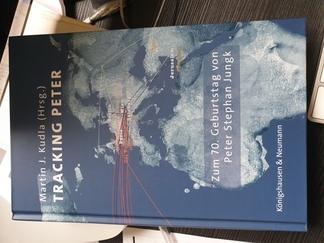
MARTIN J. KUDLA HAT DIESES BESONDERE BUCH ÜBER MICH HERAUSGEGEBEN, ES IST IM DEZEMBER 2023 ERSCHIENEN:
VERANSTALTUNG IM MÜNCHNER LITERATURHAUS, AM 29. NOVEMBER 2022, 19H
https://www.literaturhaus-muenchen.de/veranstaltung/marktgefluester/
MIT ADAH DYLAN’S ‘BRUISES’ ALS ELECTROPOP-RAHMENPROGRAMM!

https://www.eventbrite.sg/e/tracking-edith-auf-ediths-spuren-tickets-555114310847
Gespräch mit Andreas Öhler für Christ & Welt/Die Zeit, Ausgabe vom 27. Oktober 2022…
« Ich bin ein Träumer, den man nicht wecken darf »
Seine Eltern überlebten den Holocaust, seine Großtante
verhalf den Russen als Agentin zur Atombombe. Er fand dennoch zu einer Leichtigkeit des Seins.
Ein Treffen mit dem Schriftsteller und Filmemacher Peter Stephan Jungk
Aus Anlass des 250. Geburtstages von Friedrich von Hardenberg, NOVALIS, am 2. Mai 2022:
WRITER IN RESIDENCE, GERMAN LITERATURE, SPRING SEMESTER AT OBERLIN COLLEGE, OHIO:
Drei Gespräche aus dem Sommer 2021 – für das Internationale Literaturfestival Berlin…3 Herren über 90…
Mit Georges-Arthur Goldschmidt:
https://www.youtube.com/watch?v=vPI0_x1VolM
https://www.literaturfestival.com/festival/programm/2021/ldw%202021/vom-nachexil-georges-arthur-goldschmidt
Mit Paul Nizon:
https://www.youtube.com/watch?v=oftfgjvU3Nk
Mit Georg Stefan Troller:
https://www.youtube.com/watch?v=k_9DsVVkg8k
…und dieses Gespräch mit Arno Widmann – à propos ‘Marktgeflüster, Eine verborgene Heimat in Paris’…
https://www.youtube.com/watch?v=jS7sEeppd-Y
Meine Eröffnungsrede anlässlich der Ausstellung REBECCA HORN im Kunstforum Wien, am 27. September 2021…ab Minute 58’20″…
https://www.youtube.com/watch?v=KQpv0k0xDKs&t=4s
Schönes Radiointerview ORF OE1, am 10.10.2021, mit Wolfgang Popp:
https://oe1.orf.at/programm/20211010/655130/Der-neugierigste-Mensch-den-ich-kenne
‘Marktgeflüster, Eine verborgene Heimat in Paris’ ist Ende April 2021 im Verlag S. Fischer, Frankfurt/Main erschienen:
https://www.fischerverlage.de/buch/peter-stephan-jungk-marktgefluester-9783103973686
Bei Amazon.de:
Rezension von Helmut Böttiger im Deutschlandfunk:
Rezension von Sandra Kegel in der Frankfurter Allgemeinen Zeitung:
Rezension von Alain Claude Sulzer in der Neuen Zürcher Zeitung:
https://nzzas.nzz.ch/kultur/das-marktgefluester-der-heimatlosen-ld.1628880
Ende JUNI 2021 erschienen im Verlag Müry Salzmann: meine neueste Buchpublikation, ‘Warum ich beschloss, Peter Pakesch zu mögen’…
https://www.muerysalzmann.com/online-shop/peter-pakesch

https://www.actes-sud.fr/node/56865

Peter Stephan JUNGK
Remarquable photographe et espionne pour l’Union-soviétique, femme au charisme exceptionnel, Edith Tudor-Hart eut une vie mouvementée. Née à Vienne dans une famille juive instruite mais peu fortunée, Edith Suschitzky est très jeune conquise par le communisme et adhère au Parti. Elle apprend la photographie au Bauhaus et ses clichés sur les révoltes ouvrières et la misère des chômeurs de Vienne en ce début du xxe siècle la rendront célèbre. Militante activiste menacée par le pouvoir, elle émigre en Angleterre, où elle se fait connaître pour son travail de photojournalisme. Devenue espionne pour le KGB, elle joue un rôle-clé dans le recrutement de Kim Philby, le plus célèbre des Cinq de Cambridge. Mais le handicap de son fils Tommy va assombrir une vie d’exilée déjà matériellement difficile.
Les recherches menées par Peter Stephan Jungk pour faire revivre la mémoire de sa grand-tante, qu’il n’a pourtant rencontrée que rarement dans son enfance, l’amènent à interroger l’histoire de sa famille – des Juifs qui ont vu dans le communisme un espoir de changer la société mais aussi de dépasser à jamais l’antisémitisme. Plus que les témoins de l’Histoire, ils voulurent en être les acteurs.
Peter Stephan Jungk a également réalisé un documentaire sur la vie d’Edith Tudor-Hart, Tracking Edith, dont la première diffusion se fera en 2017.
_________________________________________________________________________________________
Alle meine Bücher sind ON DEMAND über den S. Fischer Verlag und/oder Amazon lieferbar!
WONDERFUL RECEPTION OF ‘TRACKING EDITH‘ IN THE UK, SUMMER 2018, released by the distributor CONTEMPORARY FILMS:
see this review by Peter Bradshaw in The Guardian of 27 July 2018
The film was shown in several cinemas in London, Brighton, Manchester, Leeds, Glasgow, etc.
OUR FILM ‘TRACKING EDITH’
UNSER FILM ‘AUF EDITHS SPUREN’
NOTRE FILM ‘SUR LES TRACES D’EDITH’
http://www.trackingedith.com/
TRAILER DEUTSCH: https://www.youtube.com/watch?v=2NVZjJq7nDQ&t=12s
TRAILER ENGLISH: https://vimeo.com/204925823
BANDE D’ANNONCE EN FRANÇAIS: https://vimeo.com/204924629
The next international screenings will take place at the New York Jewish Film Festival on Monday, January 22 2018 at 3.30pm and at 8.30pm,
followed by a screening at the Austrian Cultural Forum in London, on Tuesday, January 30 at 7pm
and at the San Diego Jewish Film Festival (SDJFF) in the USA on Sunday, February 11 2018 and Wednesday, February 14 2018.
KINOSTART DEUTSCHLAND / CINEMATIC RELEASE GERMANY
Im November 2017 startet « Auf Ediths Spuren » von Rostock bis München, von Bonn bis Berlin – in Berlin wird der Kinostart von mehreren Filmgesprächen mit Peter Stephan Jungk begleitet…Danach bleibt der Film für ein bis zwei Wochen in den genannten Kinos im Programm.
SAN FRANCISCO JEWISH FILM FESTIVAL (SFJFF) / USA
MON 24th July 2017 15:30 @ CineArts
TUE 25th July 14:25 @ Castro Theatre
TUE 1st August 14:00 @ Albany Twin
VERGANGENE EVENTS / PAST EVENTS 2016-2017
VIENNALE 2016 / WORLD PREMIERE / WELTPREMIERE
31. Oktober 18:00 @ Gartenbaukino (dt. Fassung) http://www.viennale.at/de/film/auf-ediths-spuren-df
1. November 11:00 @ Stadtkino im Künstlerhaus (engl. version) http://www.viennale.at/en/films/auf-ediths-spuren-ef
26. Februar 2017 – PARIS
18:00 @ Musée de l’art et de l’histoire du Judaisme (mahJ)#
https://www.mahj.org/fr/programme/tracking-edith-auf-ediths-spuren-48271
28. März 2017 – WIEN / PREVIEW
19:00 Preview @ Stadtkino im Künstlerhaus, in Anwesenheit des Regisseurs + anschließendem Gespräch, Ticket-Reservierung: office@stadtkinowien.at
30. März 2017 – OÖ / VORPREMIERE in Linz und Freistadt
18:30 Vorpremiere @ Moviemento Linz + anschließendem Gespräch mit Produzentin & Koproduzent
20:00 Vorpremiere @ Kino Freistadt + anschließendem Gespräch mit dem Koproduzent
31. März 2017 – WIEN / KINOSTART & PREMIERE
19:00 Premiere @ Stadtkino im Künstlerhaus, in Anwesenheit des Teams und des Protagonisten Peter Suschitzky
2. April 2017 – DIAGONALE GRAZ
11:00 Diagonale-Screening @ Schubertkino in Anwesenheit des Regisseurs und des Protagonisten Peter Suschitzky
4. April 2017 – WELS
19:00 @ Programmkino Wels in Anwesenheit des Regisseurs + anschließendem Gespräch
4. April 2017 – NEW DELHI / INDIA
19:00 @ Austrian Cultural Forum New Delhi
18. April 2017 – SALZBURG
20:00 Salzburger Filmkulturzentrum DasKino in Anwesenheit des Regisseurs und der Produzentin + Gespräch
28. April & 29. April 2017 – MINNEAPOLIS (MSPIFF)
FRI 28th April 13:30 @ Minneapolis St. Paul International Film Festival St. Anthony Main Theatre 3
SAT 29th April 12:00 @ Minneapolis St. Paul International Film Festival St. Anthony Main Theatre 4
18. Mai 2018 – INNSBRUCK
20:10 @ Leokino Innsbruck in Anwesenheit des Regisseurs + anschließendem Gespräch
28. Mai 2017 – KLAGENFURT
Filmstart im Volkskino Klagenfurt
Weitere Screenings von 29.-31. Mai
EU FILM DAYS IN TOKYO & KYOTO / JAPAN
WED 7th June 19:00 @ National Film Center Tokyo
FRI 9th June 15:00 @ National Film Center Tokyo
SUN 11th June 16:30 @ Film Museum of Kyoto
FRI 16th June 13:30 @ Film Museum of Kyoto
JÜDISCHES FILMFESTIVAL BERLIN & BRANDENBURG (JFBB) / DEUTSCHLAND
SO 9. Juli 19:00 @ Filmkunst 66, in Anwesenheit des Regisseurs & der Produzentin
DI 11. Juli 20:00 @ IL Kino, in Anwesenheit des Regisseurs & der Produzentin
« Tracking Edith » received the Gershon-Klein-Filmpreis for Best Documentary Director at the JFBB.
Publication de la traduction du livre sur Edith Tudor-Hart début octobre 2016:

OUR DOCUMENTARY FILM « TRACKING EDITH » IS COMPLETED.
UNSER DOKUMENTARFILM « AUF EDITHS SPUREN » IST ABGESCHLOSSEN.

See:
Siehe:
http://www.austrianfilms.com/films/film_detail?fid=1456433353186
BERICHT VON DEN DREHARBEITEN ZUM DOKUMENTARFILM « AUF EDITHS SPUREN »
http://www.hundertvierzehn.de/artikel/auf-der-suche-nach-edith_925.html?utm_source=NL150603&utm_medium=Mailing&utm_term=JUN&utm_campaign=114

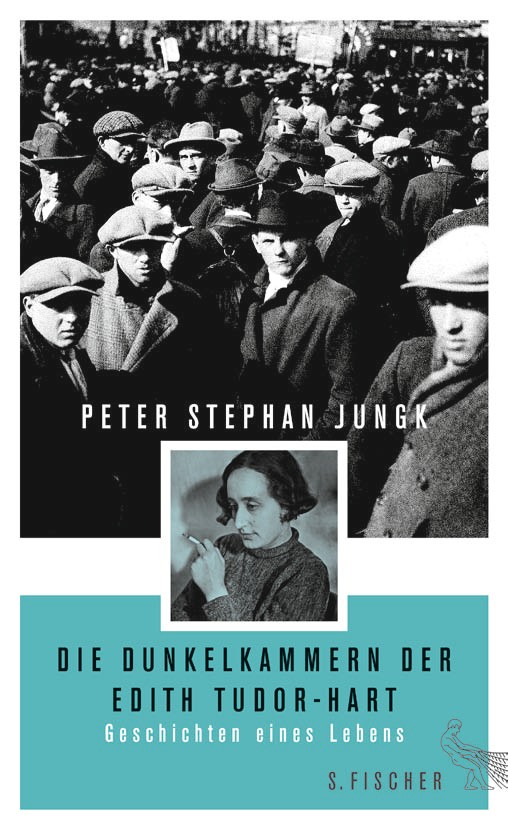
DAS BUCH « DIE DUNKELKAMMERN DER EDITH TUDOR-HART » IST AM 21. MAI ERSCHIENEN:
« THE DARK ROOMS OF EDITH TUDOR-HART »
« LES CHAMBRES NOIRS DE EDITH TUDOR-HART »
http://www.fischerverlage.de/buch/die_dunkelkammern_der_edith_tudor-hart/9783100023988
EINIGE KRITIKEN/REAKTIONEN ZU ‘DIE DUNKELKAMMERN DER EDITH TUDOR-HART’
REVIEWS RE. THE PUBLICATION OF « THE DARKROOMS OF EDITH TUDOR-HART »
Frankfurter Allgemeine Zeitung
Metropolis/Arte (ab Minute 32′)
Mit großer Freude zum S. Fischer Verlag zurückgekehrt…Erscheinungstermin Frühjahr 2015
Very happy to announce my return to S. Fischer Verlag, after years in « exile ». My new book to be published in the Spring of 2015
Mon retour, avec grande joie, aux éditions S. Fischer. Mon nouveau livre sera publié au printemps 2015
THE PERFECT AMERICAN IN BRISBANE, AUSTRALIA, SEPTEMBER 2014:
A wonderful review from the Brisbane Times, by
http://www.brisbanefestival.com.au/events/view/the-perfect-americanhttp://themusic.com.au/news/all/2014/06/24/philip-glass-the-perfect-american-leads-2014-brisbane-festival-line-up/
 HomeWhat’s onThe Perfect AmericanBuy Tickets
Brisbane Festival and Opera Queensland
in association with Queensland Performing Arts Centre and Griffith University presentThe Perfect American15 20 SeptPhilip Glass
Australian PremiereFollowing its world premiere in Madrid and acclaimed London season, the latest opera from iconic composer Philip Glass will make its Australian debut in Brisbane.With ingenious animated projections and design, The Perfect American imagines the final months of Walt Disney’s life, including mythical imaginings of Abraham Lincoln and Andy Warhol.This visually spectacular production designed by Dan Potra and directed by esteemed international theatre director Phelim McDermott (Metropolitan Opera), includes a stunning international and Australian cast, led by conductor Gareth Jones (English National Opera).Featuring British baritone Christopher Purves as Walt Disney, Cheryl Barker as Hazel, Douglas McNicol as Roy Disney, Donald Kaasch as Dantine, Marie McLaughlin as Lillian Disney and Kanen Breen as Andy Warhol alongside the Opera Queensland Chorus and Queensland Symphony Orchestra.To conclude this magnificent collaboration, Ben Wright will choreograph dancers from Brisbane’s Expressions Dance Company and Britain’s Improbable Theatre.Don’t miss one of this year’s most exciting music theatre events.Festival Conversations: pre-performance talks by John Colwill will occur in the Concert Hall foyer:Mon 15 Sept, 7.15pm-7.35pmWed 17 Sept, 5.45pm-6.05pmFri 19 Sept, 7.15pm-7.35pmSat 20 Sept, 7.15pm-7.35pmAn ABC symposium discussion on The Perfect American will take place on Thu 4 Sept, 6.30pm at ABC Studios – see Festival Conversations for more details.Sung in English with projected surtitles.
This performance features some smoke and haze effects.An Opera by Philip Glass
Based on the Book by Peter Stephan Jungk
Libretto by Rudolph Wurlitzer
©2011 Dunvagen Music Publishers Inc. Used by Permission.Commissioned by Teatro Real, Madrid, and the English National Opera, London.
In collaboration with Improbable.Date130 minutes (interval)VenueQPACConcert HallCnr of Grey & Melbourne Sts
South Bank
AB 26. APRIL 2014 AM THALIA THEATER HAMBURG:’CLÔTURE DE L’AMOUR’ VON PASCAL RAMBERTDEUTSCHE ÜBERSETZUNG VON PETER STEPHAN JUNGK‘ENDE EINER LIEBE’, MIT JENS HARZER UND MARINA GALIC… »Der Text in der Übersetzung Peter Stephan Jungks ist eine böse Anklage von nahezu bernhardscher Wucht, die Performance auf eine virtuose Weise minimalistisch…Und der tosende Schlussapplaus zeigt: Das Publikum ist überhaupt nicht besonders ironiesüchtig, das Publikum denkt manchmal ganz gerne über die Liebe nach. »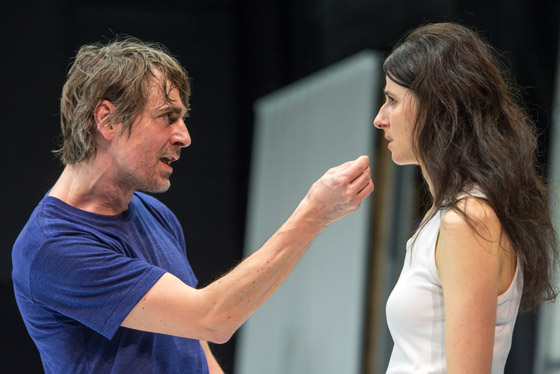 Jens Harzer und Marina Galic giften sich an © Krafft Angerer
37. INNSBRUCKER WOCHENENDGESPRÄCHE 2014, VOM 15. BIS 17. MAI 2014 zum Thema „Traum“www.wochenendgespraeche.at
MODERATOR: PETER STEPHAN JUNGKAutorinnen und Autoren: Nico Bleutge (Berlin), Ann Cotten (Berlin), Ralph Dutli (Heidelberg), Peter Stephan Jungk (Paris), Robert Kleindienst (Salzburg), Judith Kuckart (Zürich, Berlin), Josef Oberhollenzer (Bruneck), Peter Truschner (Berlin), Birgit Unterholzner (Bozen), Andrea Winkler (Wien) Lesungen: ORF Tirol, Studio 3, Rennweg 14, 20.15 Uhr, Donnerstag, 15. 5. und Samstag, 17.5.
Gespräche: Ensembleproberaum des Tiroler Landestheaters, Freitag, 16. 5. Und Samstag 17.5, jeweils von 10:00 bis 12:00 und von 15:00 bis 17:00
The Perfect American is now available on DVD and blurayJetzt auf DVD und bluray erhältlich
disponible sur DVD et bluray
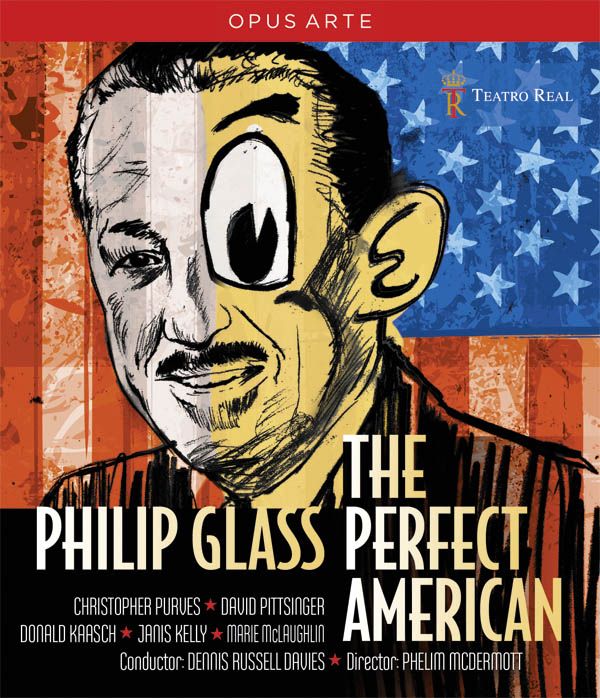
THE PERFECT AMERICAN AUF ARTE, AM 30. SEPTEMBER 2013, UM 21H55EN FRANCE SUR ARTE À 22H30 The Perfect American
lundi 30 septembre à 22h30 (122 min)
EXTRAIT 2 min
THE PERFECT AMERICAN AT THE LONDON COLISEUM – IN A BEAUTIFUL PRODUCTION

Rosie Lomas plays Lucy, reminding Walt of his impending doom, in Phelim McDermott’s production Donald Cooper
Richard Morrison
Last updated at 1:49PM, June 2 2013
How ironic that Walt Disney, who virtually banished death, disease and misery from the cartoon world he created, should be the subject of an opera focused entirely on his last months — when he was dying of lung cancer and very scared by the prospect. And that this opera about the master of animation should be composed by Philip Glass, famed for writing possibly the least animated music in the Western world.
Yet, against many expectations, The Perfect American works. That’s partly because of a brilliant, allusive and cinematic production by Phelim McDermott, and a near-faultless cast — largely the same for English National Opera as for the world premiere in Madrid in January.
But Glass’s music is also more interesting than in many of his previous 24 operas. From the ticktock percussion opening — time running out for Walt — through passages that evoke Sousa marches in the smalltown America that Disney idealised, to the deep, moody film noir orchestrations throbbing through much of the work, this is a score (impeccably conducted by Gareth Jones) deliberately at odds with the saccharine-perfect make-believe created by Disney himself.
Not that The Perfect American is a hatchet-job on Mickey Mouse’s creator. Indeed, many might be disappointed that Rudy Wurlitzer’s episodic libretto, based on Peter Stephan Jungk’s book, doesn’t take the mickey enough. Dantine, an embittered sacked employee (Donald Kaasch), challenges Disney about passing off the work of hundreds of illustrators under his name. But Andy Warhol (an hilarious cameo by John Easterlin) pops in to say that this is what all modern artists do. Damien Hirst might surely agree.
Similarly, an out-of-control animatronic Abraham Lincoln (an excellent Zachary James) physically attacks Disney for his racist views. But then a young boy dying of cancer (touchingly played by Rosie Lomas) tells Walt that going to Disneyland was the best moment of his short life. And that’s the way this even-handed opera progresses, with the commanding Christopher Purves playing Disney — with slow-motion deliberation — more as flawed but avuncular folk-hero than exploitative monster.
What gives the show depth and dazzle is McDermott’s use of video animations (59 Productions) and his acting group Improbable to evoke both the flickering film of early Hollywood and an animal kingdom that, unlike Disney’s, is more sinister than cuddly. The dark climax is the arrival of Lucy, a trick-or-treating girl dressed as an owl (Lomas again) — for Disney a terrifying portent of his impending doom. The opera should have finished with Disney’s death, but it’s still an engrossing two hours.
Box office: 020-7845 9300, to Jun 28
THE PERFECT AMERICAN NOW AVAILABLE IN PAPERBACK AND AS A KINDLE E-BOOK
Mortal Mouse
By Lisa Abend / MadridMonday, Feb. 04, 2013
Follow @TIME
As the curtain rises on the perfect American, a man clings, twisted and cowering, to the bars of his hospital bed. Music pulses, and an owl descends–a mere cartoon, but terrifying nonetheless–while a team of artists, almost menacing in their obsequiousness, sketch sets of circles that arrange themselves into a familiar mouselike form. The drawings function as a reveal of sorts: the man in the bed is Walt Disney, and he is dying. « Go away! » he cries. « I drift between knowing what is real and not real. »
This is not the Uncle Walt of your childhood. The kindly, avuncular man who introduced The Wonderful World of Disney each Sunday night is still wearing that ever-so-slightly lopsided mustache and a carefully cut suit, but he is now in the grip of existential panic. Crippled with anxiety about his legacy and fighting desperately against his impending death, this is a Disney who, after a lifetime spent creating illusions, finds himself no longer able to stave off reality. That tension, and the tragedy that lies at the heart of America’s self-made mythology, helps explain why Philip Glass, America’s most famous living composer, has written an opera about him.
Based on Peter Stephan Jungk’s 2004 historical novel of the same name, The Perfect American premiered at Madrid’s Teatro Real on Jan. 22 and will move to London in June and possibly Los Angeles after that. Teatro Real’s artistic director, Gerard Mortier, says he knew as soon as he read Jungk’s book about the last days of Disney that he wanted Glass to write an opera about it. « Animation is based on the repetition of images, » Mortier says. « Glass’s music is all about the repetition of notes. And his work, like Disney’s, represents a distinctly American way of seeing the world. »
Still, it is not the most obvious pairing. Compared with the mainstream appeal of Disney’s cartoons and movies, Glass’s minimalist music is decidedly avant-garde. His best-known work–he has written more than 20 operas and 10 symphonies–is a five-hour plot-free opera about Einstein. Another piece, about Gandhi’s early years, is performed in Sanskrit.
Glass’s latest reimagining of an iconic man’s life uses vignettes to depict a Disney who, however great his influence on American culture, was also a union breaker who discriminated against African Americans and women. Yet Glass, who has long supported leftist causes, including Occupy Wall Street, speaks gently of Disney’s unenlightened ideas. « It was a different time. People were more conservative then, » he says. « You have to consider the context. »
Political differences aside, there’s no doubt that Glass identifies with his lead character. Both men’s work, after all, sits at the juncture of art and entertainment. Disney included Stravinsky in his soundtrack to Fantasia; Glass has collaborated with David Bowie and Linda Ronstadt, written scores for mainstream films like The Truman Show and still does commercial work, including the tune for a Best Buy ad that aired during last year’s Super Bowl. « The unique thing about American culture is that high and popular culture are closely related, » says Glass. « Disney understood that. »
In the scene that ends The Perfect American’s first act, Disney talks to an animatronic Abraham Lincoln, presumably liberated from every kid’s least favorite Disneyland ride. A childhood hero of Disney’s, Abe was immortalized in the theme park in 1965, the year before Disney died of cancer at age 65. « In spite of every obstacle, we made something of ourselves. We changed the world, » he sings to the 16th President, and it is easy to imagine Glass, whose father was an auto mechanic turned radio-repair-shop owner, saying the same.
For weeks before The Perfect American premiered, Glass would show up for rehearsals in Madrid, his mass of still-dark curls tucked under a black knit cap, and sit quietly at the front of the orchestra, occasionally sending a note to the percussionist. But if his physical presence was unimposing, his reputation was not. « You know that scene in Night at the Museum when the anthropologist who’s been studying Native Americans all her life gets to meet Sacagawea? » asks Christopher Purves, the baritone who plays Disney. « Having Glass in the room with you is like that. »
Before Glass, nearly all serious 20th century music was atonal. « Almost single-handedly, Philip made tonality acceptable again for composers, » says Dennis Russell Davies, director of the Linz Opera in Austria who is also the musical director for The Perfect American. And for all the mesmerizing, elegaic qualities of Glass’s music, there is firm structure and careful intonation behind it. In The Perfect American, as in his other works, passages in two notes repeat over and over. In Mozart or Haydn, those notes would be the classical equivalent of background music. But Glass brings them to the fore. Says Mortier: « He takes these key elements of Western music and makes you see them anew. »
Glass writes every note himself and has assistants transpose them to a computer. (« The door of technology is a heavy one for me to open, » he says wryly.) Still, he understands why the Disney in The Perfect American claims the work created by his army of artists as his own. « Andy Warhol and Jeff Koons understood that art can be mass-produced, » he says. « But Disney beat them to it. He was a visionary about that. »
By the end of Disney’s life, even visionary status failed to console him as he watched his name become bigger, as he sings in the opera, than that of Henry Ford, George Westinghouse and poor Howard Johnson. In The Perfect American, Disney rages against the end, squeezing promises from his family to have him cryogenically preserved (a real-life rumor that his relatives have denied) and awakened in a future when there is no threat of death. Even his most enduring creations offer pale solace, with Disney observing that few people will remember him, while everyone will remember Mickey and Donald.
Unlike this operatic Disney, Glass admits to no jealousy of his creations. Despite turning 76 on Jan. 31, he is still hard at work. In addition to completing this opera and writing another that will premiere in Linz in April, he found time while he was in Madrid to finish three piano études that had been dogging him for years. But the composer recognizes that he wouldn’t have been able to do the Disney opera earlier in his life. In part that’s because it has only been in the past decade or so that anyone would dare take on the company’s powerful executives. (« They asked to see the libretto, and we said no, » says Glass. « I’ve done my Disney movie–that was Kundun. So they won’t give me another? I don’t care. ») Yet it’s also only now that he thinks he understands what Disney the man, not the corporation, feared so much. « I wouldn’t have known how to do this opera when I was 40, » he says. « Eternity travels up to you at the speed of light. Doing the Disney one now, at my age, has made me much more sympathetic to his attitudes. »
In the opera, a rotating scrim upon which animations are projected seemingly as they are drawn conjures Disney’s work without ever using his iconographic mice and ducks–ingenious staging that also deftly skirts copyright infringement. The music, in turn, is pure Glass. Yet in a few instances, like a party where the guests sing a « Happy Birthday » that sounds nothing like the famous song but is still somehow resonant and anthemic, he makes reference to more traditional American genres.
And to American artists. At the start of the second act, Warhol strides across the stage in a purple velvet suit seeking to paint Disney’s portrait. In truth, the two men never met; Warhol’s inclusion is the work of novelist Jungk’s imagination. But Glass found himself envisioning Warhol’s primary colors to write music about Disney and says he was struck by the similarities in the two creators. A self-made man who merged high and low culture in his work, Warhol realized the American Dream by forging a uniquely American style of art. The same is true of Disney, who was as much a bully as he was a genius. « What makes this opera interesting, » the composer says, « is that it shows the best of American character–and some of the worst. »
Read more:http://www.time.com/time/magazine/article/0,9171,2134501,00.html#ixzz2Jgu5UB27
Inside NYTimes
Music Review
The Operatic Walt Disney, Delivered by Philip Glass
‘The Perfect American,’ by Philip Glass, at Teatro Real
By ZACHARY WOOLFE
Published: February 1, 2013
MADRID — Peter Stephan Jungk’s novel “The Perfect American” is a surreal, meditative, episodic account of the last days of Walt Disney.

Javier Del Real/Teatro Real, via Agence France-Presse — Getty Images
Christopher Purves as Walt Disney in « The Perfect American. »

Javier Del Real/Teatro Real/European Pressphoto Agency
John Easterlin as Andy Warhol in « The Perfect American. »
It seems at first glance to be an ideal source for an opera by Philip Glass, whose surreal, meditative, episodic explorations of the lives of famous men — always men — have formed the bulk of his prodigious operatic output.
Avoiding the long arm of the Disney Company’s lawyers by using only the most stylized versions of its subject’s famous images, the opera, a pleasure to listen to but dull as drama, had its premiere at the Teatro Real here last week. It has been one of the crowning events of the past year’s globe-trotting celebration of Mr. Glass’s 75th birthday. (He turned 76 on Thursday.)
At the fourth performance on Wednesday, the subtle, moody score, at war between its propulsive and serene impulses, felt more than equal in quality to the festive occasion. While criticisms of Mr. Glass’s music as cookie-cutter have always been misguided, “The Perfect American” finds him in especially unpredictable form, experimenting with sonorities, textures and pacing.
Led by the Glass veteran Dennis Russell Davies with careful attention to both its underlying pulse and its twists of temperament, the opera opens with an ominous, low murmur punctuated by sharp, syncopated percussion snaps. The sound gradually expands through the orchestra and warms into something that, under Mr. Davies, has more gentle swing than the relentless forward motion generally associated with Mr. Glass.
The music often seems devised to trail off, to run out of steam as it expresses Disney’s struggle with the cancer from which he died in 1966 at 65. But there is nothing exhausted about its inventiveness. Simultaneously eclectic and cohesive, the score incorporates strange, fractured brass fanfares out of Janacek’s “Makropulos Case” and lilting, seductive rhythms that feel almost foxtrotty, like a misty echo of the 1930s.
Appropriately, for this birthday year, there is a stentorian, Wagnerian choral setting of “Happy Birthday to You,” directed at Disney within the opera but perhaps also a wink from Mr. Glass.
His version of “The Perfect American” was commissioned during the adventurous impresario Gerard Mortier’s brief stint at the helm of New York City Opera. When Mr. Mortier’s hiring fell through in the fall of 2008, a year before his tenure was officially to begin, he decamped to the Teatro Real.
With him traveled many of his plans for City Opera, including a grand production of Messiaen’s “St. François d’Assise” in 2011; a version of Mozart’s “Così Fan Tutte,” directed by Michael Haneke, that opens later this month; and, next season, Charles Wuorinen’s new adaptation of “Brokeback Mountain.”
And, not least, “The Perfect American,” which has been directed by Phelim McDermott, who a few years ago with Julian Crouch created a vibrant version of Mr. Glass’s 1980 masterpiece, “Satyagraha,” that came to the Metropolitan Opera from the English National Opera in London. (“The Perfect American” travels to London in June.)
Mr. Jungk’s novel, originally published in German in 2001, is told from the perspective of Wilhelm Dantine, an Austrian-born Disney animator who, after being curtly fired, stalks his old boss through his final months. Like a more malignant version of the investigator whose inquiries frame the story of “Citizen Kane,” Dantine has sought out Disney’s family, friends, colleagues and acquaintances, from Salvador Dalí to Peter Ustinov, reconstructing a bizarre narrative of Disney’s illness and death.
Dantine’s telling advances rumors, some more substantiated than others, that Disney, far from the genial uncle persona he cultivated in public, was a cruel, adulterous alcoholic, as megalomaniacal and racist as he was visionary and inspiring. In his great strengths and great weaknesses, Mr. Jungk implies, he is a potent symbol for 20th-century America.
Archetypal and specific, good and bad, Disney is, in other words, an ideal operatic character. But Mr. Jungk’s tight, strange novel has been transformed into a slack, mild pageant with an alluring soundtrack.
Each inspired turn in the music is countered by Rudy Wurlitzer’s stodgy libretto. The prosy text takes us from Disney’s hometown, Marceline, Mo., to his Bel Air mansion to his hospital bed without ever coming together in a narrative, whether a traditional one or something in the abstract, ritualized mode that Mr. Glass has long favored.
The opera is a score in search of a story. Dantine has gone from narrator to bit player; the tension between him and Disney, Old World and New, has vanished without being replaced by another drama. The book’s most striking set pieces — Disney’s dialogue with an animatronic Abraham Lincoln; the unexpected arrival of a frightening girl in an owl mask — retain their mysterious power onstage but don’t connect to their surroundings.
Matters are not helped by Mr. McDermott’s uncharacteristically vague, inert production, though a disclaimer should be attached to that assessment: a technical malfunction before Wednesday’s performance prevented rigs above the stage from rotating properly. Though the problem was not announced to the audience, it evidently had an impact on some of the projections that form a large part of the production’s visual style.
Even if the technical side had been running smoothly, the show might well have still proved unsatisfying. Mr. McDermott and the designers Leo Warner and Joseph Pierce adroitly found their way around Disney’s copyright restrictions by settling on a look for the show’s projected animations that is more William Kentridge than Walt Disney. Deliberately rough and sketchy, the projections have the sober effect of Mr. Glass’s music, full of scratches, erasures and humans melting into animals and back again.
But not enough use has been made of Mr. McDermott’s extraordinary Improbable Skills Ensemble, whose puppetry and acrobatics formed the core of his “Satyagraha.” And little attention seems to have been paid to the singers’ interactions, which often feel awkward and unevocative.
The tenor Donald Kaasch powerfully fills out Dantine’s intense lines. But while the baritone Christopher Purves sounds firm, he is far too blandly affable as the misanthropic yet magnetic Disney. Neither he nor the opera’s creators seem to have known what to do with their protagonist, how to make a character who both repels and attracts.
Mr. Jungk’s book offers no pat conclusions, but it arouses emotion in a way that Mr. Glass’s opera, despite its searching, resourceful music, does not. It would be fine if we were to leave “The Perfect American” feeling ambivalent about Disney, but we shouldn’t feel nothing.
“The Perfect American” runs through Wednesday at the Teatro Real in Madrid; www.teatro-real.com.
Opera review: Walt Disney in fantasyland In the new Philip Glass work, ‘The Perfect American,’ the visionary is a flawed, dying man who, even so, makes magic.
By Mark Swed, Los Angeles Times Music Critic
January 24, 20134:00 a.m.
MADRID — Walt Disney was hardly a perfect American.
He may have been the most famous and beloved American during his lifetime. But his private magic kingdom was not always the happiest place on Earth. Disney had his own private torments and is reputed to have railed against unions, blacks and Jews.
At least that is part of the 21st century Disney legend, and it is necessarily part of Philip Glass‘ new opera, « The Perfect American. » Far from sterilized yet also disarmingly affectionate, it looks at Disney the myth, the artist and the man. The work contrasts between the America that formed Walt Disney and the America he formed for the rest of us.

Philip Glass, Cai Guo-Qiang named Praemium Imperiale laureates
And that is what makes Disney a perfect American opera character, even if it took Spain to bring Glass’ « The Perfect American » to the lyric stage. The premiere (in English) was Tuesday night here at the Teatro Real.
Glass delves deep into the psyche of a visionary at the end of his life, of an artist who devoted his life to a vision of a world without death, now grappling with mortality. By most counts this is Glass’ 24th opera, and it is his most personally intimate. It does what opera does best by making the larger-than-life creator of Mickey Mouse an imperfect life-size, ultimately earning our wonderment.
A small, artificial controversy had built up around the premiere, mostly instigated by the British press when word got out that « The Perfect American » would depict a bigoted Disney. Even Glenn Beck asked why Disney is being painted as a racist and misogynist.
Glass’ project began in the United States, when Belgian opera impresario Gerard Mortier commissioned it for the struggling New York City Opera in 2008. When the money was cut, Mortier took « The Perfect American » to Madrid.
American novelist and screenwriter Rudy Wurlitzer wrote the quick-moving libretto, which is based on a German novel by Peter Stephan Jungk. A recurring image is an owl that Disney killed as a boy. He had been told an owl was an ominous sign; the opera suggests he never got over the incident.
In the prologue, a delirious, dying Disney imagines the owl overhead in his hospital bed. In one of many flashbacks, Lucy, a neighbor girl, shows up at his Holmby Hills home trick-or-treating in an owl costume, causing a commotion. Back in the hospital, a hallucination of Lucy as the owl is Disney’s last vision.
This is a Walt Disney whose whole career can then be seen as a spectacular effort to overcome his demons. He creates fantasylands where there is no death, no threat, no blood. But in his dying, Disney must confront those demons with his defenses down. In Glass’ opera, Disney does this as an artist.
PHOTOS: Arts and culture in pictures
The first act is the public Disney. With his brother and partner, Roy, Walt returns to the small Midwest town where he grew up (it became the model for Disneyland’s Main Street) and where he is worshiped like a god to donate a public swimming pool. The libretto jumps between time and place, always showing Disney in command. In his hospital bed he hopes to defy death, fascinated with the new theories of cryogenics (although the rumors that he was actually frozen have long been dismissed).
In his office at his Burbank studio years earlier, he and Roy recall triumphs and plot the future. At a birthday party, Glass gives Walt a bright new tune for Happy Birthday.
In the act’s final scene, Disney goes to Anaheim late at night to help repair the animatronic Disneyland Lincoln, which has been malfunctioning and attacking members of the audience. Disney gets in an argument with the robot about blacks, and Lincoln goes crazy again and whacks Walt.
The second act is the inner Disney, the insecure artist. Andy Warhol pays a surprise visit to tell Disney how much he loves the work. A fired animator, Dantine, accuses Disney of exploiting his workers and of having little artistic talent. (Disney counters with his ability to bring his visions into being.) As he lay dying in 1966, 10 days after his 65th birthday, Disney befriends an injured, awe-struck young boy, Josh, who becomes his savior.
Glass’ repetitive style is recognizable throughout, but with this opera he shows more harmonic richness than ever, which seems just right for every situation, mood or thought.
The production by British director Phelim McDermott, who was responsible for the Metropolitan Opera’s impressive production of Glass’ Gandhi opera, « Satyagraha, » five years ago, celebrates Disney’s drawings with projections on moving screens. A group of funky animators seems to operate all that goes on on stage. The characters are wild yet believable, even and especially the animatronic Lincoln.
Baritone Christopher Purves has captured in Disney the charisma, arrogance and humanity of the man, and it’s already a candidate for one of the most important opera performances of the year. He makes racist or anti-Semitic remarks sound not like tirades but like attitudes that were all too common at the time, especially around Los Angeles. One of the points of « The Perfect American » is to show us how much times have changed.
The rest of the mostly excellent large cast includes David Pittsinger as Roy Disney, Donald Kaasch as Dantine, Janis Kelly as Disney’s nurse Hazel George, Marie McLaughlin as his wife, Lillian, and John Easterlin as Warhol. Rosie Lomas made a strong impression in the high-lying parts of the owl-girl Lucy and Josh, the boy in the hospital. And Zachary James had a touch of Daniel Day-Lewis in his Lincoln.
Dennis Russell Davies, who has led the premieres of most of Glass’ operas and symphonies, once more made sure of tone and detail.
This production will next be presented at English National Opera in London this June. Then Los Angeles? There is no guarantee, but this is a great American opera that needs to be seen in L.A. And it is also the only great L.A. opera.
THE OBSERVER, SUNDAY, JANUARY 6, 2013
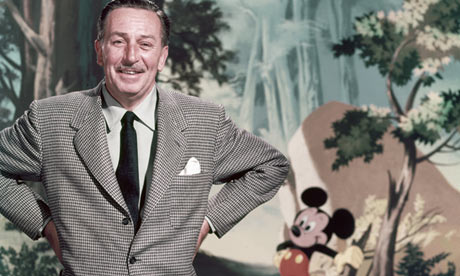
Walt Disney portrait with Mickey Mouse, 1950. Photograph: Alfred Eisenstaedt/Time & Life Pictures/Getty
See what’s on Production
The Perfect American
Philip Glass
New Production
Sat 01 Jun 13 – Fri 28 Jun 13
9 performances remaining
‘THE PERFECT AMERICAN’ AT THE ENO IN LONDON, IN JUNE 2013
À partir de 27/8 et jusqu’au 31/8 tous les soir à 20h30:
Fictions / Le Feuilleton
par Blandine Masson (coordination) Le site de l’émission
du lundi au vendredi de 20h30 à 20h55
La Traversée de l’Hudson de Peter Stephan Jungk
Adaptation : Julien Doumenc
Traduction : Bernard Lortholary (éditions Jacqueline Chambon)
Réalisation : François Christophe
« Le pont le plus long au-dessus de l’Hudson, un embouteillage monstre, deux personnages dans une voiture, la mère et le fils. La scène semble dressée pour un psychodrame. Surtout quand la mère est juive et le fils douloureusement attaché à son père mort. Un père mondialement connu pour ses ouvrages scientifiques, un père bouillant d’une énergie et d’une joie de vivre qui font tellement défaut au fils, un père aimant aussi. Car dans cette turbulente famille, toujours entre New York, Vienne et Berlin, l’amour est partout, l’intimité excessive. Et quand le fils découvre en se penchant sur la rambarde du pont le corps géant et nu de son père posé sur l’eau, c’est comme si une obscénité recluse dans le passé resurgissait. »
Note de l’éditeur
Peter Stephan Jungk est né en 1952 en Californie, il a grandi à Vienne et vit depuis 1988 à Paris. Il écrit en allemand. Il a écrit plusieurs romans, dont la plupart ont été traduits en anglais et certains en français.
Danièle Lebrun : Mom
Christophe Giordano : Gustav
Jean-Gabriel Nordman : Ludwig
Thibault de Montalembert : Le narrateur
Et les voix de : Louisa Bentoumi et Sébastien Laugenie
Bruitage : Patrick Martinache
Musique originale composée par Dominique Massa et interprétée par Erwan Ricordeau
Equipe de réalisation : Emilie Couët, Julien Doumenc, Kevin Le Bars
Assistante à la réalisation : Clémence Gross
« La Traversée de l’Hudson » est publiée aux éditions : Jacqueline Chambon
Jacqueline Chambon
Thème(s) : Création Radiophonique| Littérature Contemporaine| Littérature Etrangère| Hudson| Peter Stephan Jungk
_
INTERVIEW MIT LAURENT BINET: HOLLANDE IST EIN BOXER!
http://www.welt.de/print/die_welt/literatur/article109809653/Hollande-ist-ein-Boxer.html
« Zwischen Biografie und Autobiografie »
Peter Stephan Jungk « Zwischen Biografie und Autobiografie », Stadt Salzburg, 12 Juni 2012

Wann:
5020 Salzburg,
Ticket-Information:
Homepage:

Fictionalised account of animator’s life, one of nine new productions to be staged by the company, will present a ‘nightmarish’ vision of Walt Disney
FRANCE INTER FIN MARS 2012:

LE COEUR ÉLECTRIQUE À PARTIR DU 7 MARS 2012
http://www.amazon.fr/exec/obidos/ASIN/2330002521/?tag=flatwave-20
FRANZ WERFEL – A LIFE FROM PRAGUE TO HOLLYWOOD…
NOW AVAILABLE AS E-BOOK:
plunkettlakepress.com/franzwerfel.aspx,
barnesandnoble.com/w/franz-werfel-peter-stephan-jungk/1014382867?ean=2940014320603
DER MANN MIT DER KROKOTASCHE:
http://www.welt.de/print/die_welt/vermischtes/article13927347/Der-Mann-mit-der-Krokotasche.html
DER ENTRÜMPLER ÜBERRUMPELT MICH:
http://www.welt.de/print/die_welt/vermischtes/article13838270/Der-Entruempler-entruempelt-mich.html
AZOUZ BEGAG:
LECTURE À L’INSTITUT GOETHE À PARIS, LE 7 NOVEMBRE 2011
http://www.goethe.de/ins/fr/par/ver/fr8226075v.htm
Ad Edmund de Waal, ‘Der Hase mit den Bernsteinaugen’
Über den Briefwechsel Stefan Zweig – Joseph Roth:
« Wir werden nicht alt, wir Exilierten! »
À propos HUBERT SAUPERS neuem FILM:
JOHANNES-LEPSIUS-HAUS IN POTSDAM, AM 9.9.2011
AM 8. SEPTEMBER 2011, 18 UHR
Der „Buchpreis der Salzburger Wirtschaft“ wird heuer dem in Paris lebenden Autor Peter Stephan Jungk verliehen
DIE GESTÄNDNISSE DER MADAME M. (Erschienen in: ‘Die Welt’, 27.8.2011)
MORGENS UM 7 BEI RTL MATIN (Erschienen in: ‘Die Welt’, 16.7.2011)
MEIN MARKTHÄNDLER AM MARCHÉ ALIGRE (Erschienen in: ‘Die Welt’, 21.5.2011)
MIT ANSELM KIEFER IN CROISSY-BEAUBOURG (Erschienen in: ‘Die Welt’, 16.4.2011)
« Das Elektrische Herz » erschienen im Februar 2011 im Verlag Zsolnay/Hanser
DAS ELEKTRISCHE HERZ AUF FACEBOOK…
Rezension in der Neuen Zürcher Zeitung, 27. April 2011:
http://www.nzz.ch/magazin/buchrezensionen/alles_was_maenner_und_frauen_bewegt_1.10390118.html
AD PAUL NIZON: STAATSPREIS FÜR EUROPÄISCHE LITERATUR, AM 15. NOVEMBER 2010
AD PETER HANDKE, « IMMER NOCH STURM »
CLAUDE LANZMANN: DER PATAGONISCHE HASE
KRITIK ERSCHIENEN AM 4. SEPTEMBER 2010 IN ‘DIE WELT’
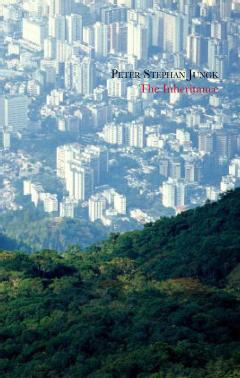
‘The Inheritance’ published in February 2010, by Pushkin Press, London (First edited in Gemany, in 1999, as ‘Die Erbschaft’

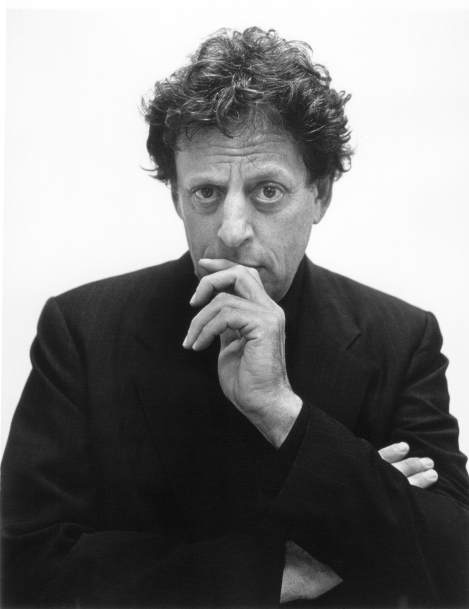
Philip Glass is planning an opera based on ‘The Perfect American’, for 2013 at the Teatro Real in Madrid & the English National Opera
http://www.sonicscoop.com/2011/06/19/icons-philip-glass-music-genetics/
http://online.wsj.com/article/AP5b524c5c60934d49ac325381d4a6cfdb.html